Eye care today goes far beyond reading letters on a chart. While basic vision tests can determine how clearly a person sees, they do not reveal the full story of eye health. An optometrist Oshawa relies on advanced diagnostic tools and technologies to evaluate not just vision, but the overall health and function of the eyes. These tools help detect early signs of disease, monitor changes over time, and create personalized treatment plans for patients of all ages.
Understanding how these diagnostic methods work provides insight into why comprehensive eye exams are essential even for people who feel their vision is perfectly fine.
Beyond the Eye Chart: The Need for Comprehensive Eye Exams
Standard vision tests mainly evaluate visual acuity which measures your ability to see at different distances. However, many serious eye conditions develop silently without noticeable symptoms in the early stages. Conditions such as glaucoma and macular degeneration and diabetic eye disease progress to advanced stages before they start to impact vision. This is why optometrists use a combination of diagnostic tools to evaluate Eye structure and internal health Retinal condition Eye pressure Visual field performance Corneal and lens clarity. Each tool contributes a different layer of information, which helps establish a comprehensive understanding of eye health.
Key Diagnostic Tools Used by Optometrists in Oshawa
1. Digital Retinal Imaging
Digital retinal imaging enables optometrists to obtain high-definition photographs of the eye’s posterior segment, which includes the retina and optic nerve and blood vessels.
This technology helps detect:
- Early signs of glaucoma
- Diabetic retinopathy
- Hypertension-related eye changes
- Macular degeneration
The primary benefit of this system lies in its ability to maintain image records, which enables physicians to monitor patient progress through visual comparisons of their progressive changes.
2. Optical Coherence Tomography (OCT)
Modern optometry uses Optical Coherence Tomography (OCT) as its most advanced diagnostic tool. The system creates cross-sectional retinal images through light wave technology.
Optometrists use OCT to:
- Measure the thickness of retinal tissue
- Detect the presence of fluid accumulation and swelling conditions
- Identify early stages of macular disorders
- Track the advancement of glaucoma disease
OCT enables early detection of visual impairment through its ability to show details at the microscopic level.
3. Tonometry (Eye Pressure Testing)
Eye pressure measurement serves as an essential method for glaucoma detection which leads to optic nerve damage without prior warning signs.
Tonometry helps:
- Measure intraocular pressure (IOP)
- Identify patients who have a risk of developing glaucoma
- Monitor treatment results.
The need for regular testing exists because even minor pressure increases serve as danger signals.
4. Visual Field Testing
Visual field testing assesses side vision because it plays a vital role in activities such as driving and walking.
This test can detect:
- Blind spots in vision
- Peripheral vision loss from glaucoma
- Neurological conditions affecting vision
Patients respond to light signals while they focus on a central point, which enables the optometrist to map their complete range of vision.
5. Slit Lamp Examination
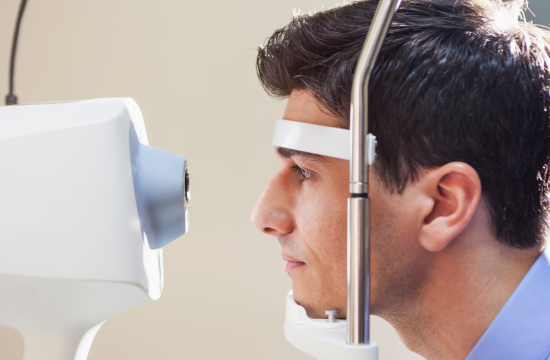
A slit lamp functions as a specialized microscope which enables users to see the eye’s front structures at an increased size. The equipment is used to study three specific parts of the body which include: The equipment is used to study three specific parts of the body which include The equipment uses advanced technology to identify cataracts and dry eye disease and infections and corneal injuries with exceptional accuracy.
6. Refraction and Automated Vision Testing
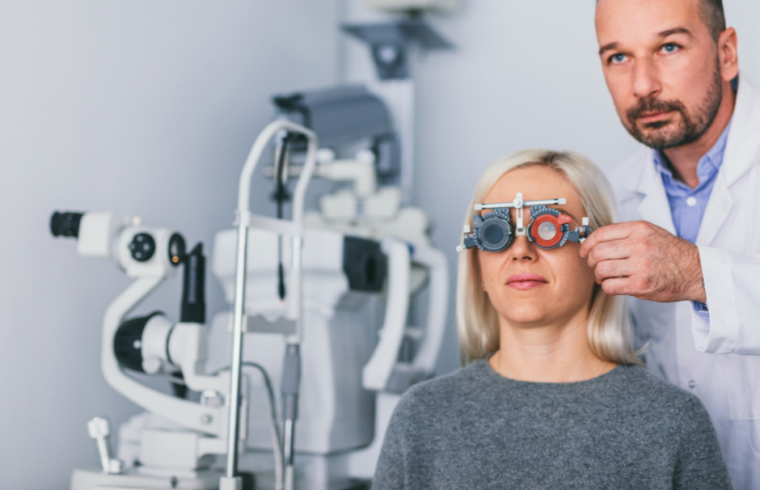
Refraction testing determines the correct prescription for glasses or contact lenses. The automated devices help estimate lens power quickly and the optometrist performs final power adjustments.
The system provides three benefits which include:
- Accurate prescription strength
- Clear and comfortable vision
- Reduced eye strain
How These Tools Work Together
No single diagnostic tool can provide a complete understanding of eye health. Instead, optometrists combine multiple tests to create complete clinical assessments.
The following example demonstrates this point:
- OCT may detect early retinal changes
- Retinal imaging confirms structural abnormalities
- Visual field testing shows functional impact
- Tonometry identifies pressure-related risks
The optometrist in Oshawa uses structural data and functional information and pressure measurements to diagnose conditions at an early stage and recommend appropriate treatments.
Early Detection: The Most Important Advantage
The most important advantage that modern eye diagnostic techniques provide to patients enables them to discover their health problems at an early stage. Most eye diseases progress at a gradual rate without causing any noticeable symptoms, which results in patients experiencing their first symptoms after their eye health has already reached a critical point.
Through their work with complete eye examinations optometrists gain the ability to:
- Detect medical conditions that exist without any visible signs
- Treat patients at an early stage to stop them from losing their eyesight
- Test patients’ chronic medical issues in a better way
- Design custom eye prescriptions that improve patient satisfaction and vision performance
The need for early medical treatment becomes vital for three groups of people which include children, elderly people and those who have diabetes and hypertension.
The Future of Eye Care in Oshawa
The field of optometry is advancing through the introduction of artificial intelligence-based imaging technology and ultra-widefield retinal imaging and improved digital tracking systems. The new technologies now available for eye examinations establish higher standards of accuracy and operational speed and preliminary result assessment than any previous methods.
The increasing adoption of these instruments by optometrists will enable them to identify medical conditions at earlier stages while developing customized treatment plans that suit the specific visual requirements of each patient..
Conclusion
An optometrist in Oshawa does far more than check how clearly a patient can see. The clinic uses advanced diagnostic tools which include OCT and retinal imaging and visual field testing and tonometry to create complete eye health assessments. The comprehensive method enables early detection of vision problems and eye diseases which doctors can then monitor and match with suitable treatment methods. The technologies protect eyesight while safeguarding people’s ability to live their lives throughout their existence.